
A Retail REIT Positioned for Durable Income and Disciplined Growth
Inland Income Trust in a non-listed REIT that provides income focused access to stabilized retail real estate assets in major regional markets and growing secondary markets throughout the United States, supported by a rigorous acquisition process, institutional level governance, and a longstanding commitment to transparent reporting.
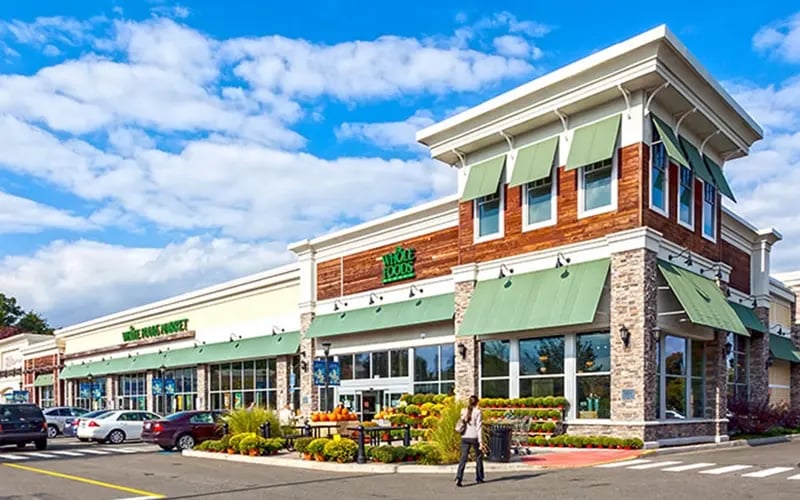
Built for Long Term Value Creation
Inland Income Trust is guided by a long horizon investment approach centered on stabilized, primarily grocery anchored and necessity based retail real estate, a sector recognized for its resilience, consistent traffic drivers, and durable tenant demand. Our strategy emphasizes stability through disciplined underwriting, high quality tenant mixes, and active portfolio management that adapts to evolving market conditions. This long term orientation supports thoughtful diversification, steady income potential, and a measured approach to reducing volatility across market cycles.

Inland Income Trust Investment Thesis

Stability
Recurring cash flows supported by necessity based, grocery anchored tenants with strong operating fundamentals.

Quality
Focus on stabilized grocery anchored and necessity based retail assets in markets with favorable demographics, limited new supply, and resilient demand drivers.

Governance
Disciplined oversight, transparent reporting, and a risk managed approach.

Interests
Supported by Inland’s six decades of real estate expertise and commitment to investor first decision making.

Bernard J. Michael
President & Chief Executive Officer
Inland Real Estate Income Trust
Bernard J. Michael serves as President and Chief Executive Officer of Inland Real Estate Income Trust and has been a member of the board since 2014. He brings more than 25 years of experience across real estate investment, development, and complex legal and transactional work, including co founding AWH Partners, LLC, where he helped lead more than $1.4 billion in acquisitions and over $300 million in redevelopment projects. Earlier in his career, Mr. Michael was a senior real estate attorney advising global developers, lenders, and institutional owners on marquee projects such as Time Warner Center and Hudson Yards, as well as major multifamily, retail, office, and hospitality developments across the U.S., China, and the Middle East.
Mr. Michael has held leadership roles spanning both private and nonprofit sectors, including as a partner in the Real Estate Group at Proskauer, LLC. He previously founded the law firm Michael, Levitt & Rubenstein, LLC, and was a real estate attorney at Weil Gotshal & Manges, and Shea & Gould.
Mr. Michael is a graduate of Brown University and New York University School of Law.